Branding
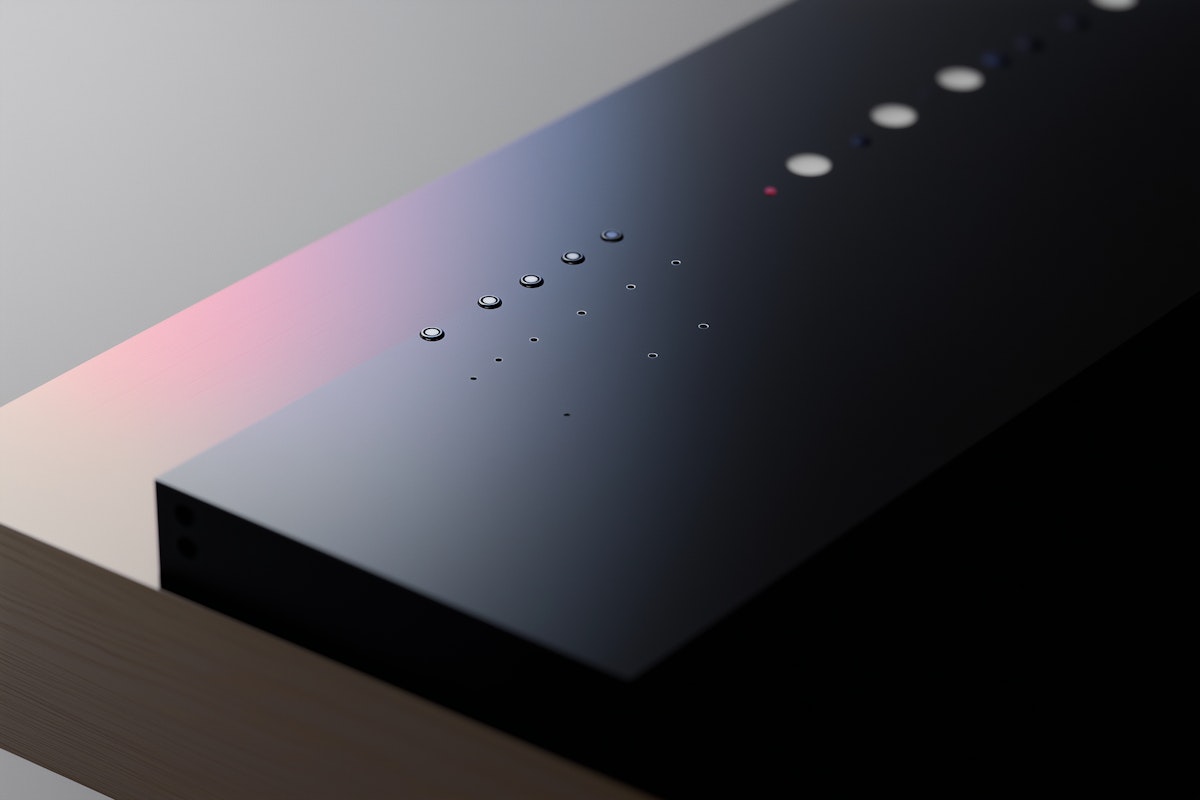
A collection of sharp, angular black prisms floating against a gradient dark background, showcasing a modern and sophisticated approach to digital 3D geometric composition.
Black Geometric Prisms
Category
Branding
Author(s)
Publish Date
Apr 5, 2025
Topics
A collection of sharp, angular black prisms floating against a gradient dark background, showcasing a modern and sophisticated approach to digital 3D geometric composition.
Problem :
In the realm of digital 3D art, it is often challenging to create compositions that convey both modern sophistication and visual intrigue without overwhelming the viewer. Many geometric designs either lack depth and subtlety or become too visually complex, losing their elegance.
Solution :
This project proposes a collection of sharp, angular black prisms, artfully arranged to float against a gradient dark background. By leveraging the interplay of light, shadow, and reflective surfaces, the composition achieves a sense of depth and refinement.
The use of monochromatic black tones ensures a minimalist yet powerful aesthetic, while the geometric forms provide structure and visual interest. This approach allows for versatility, making the visuals suitable for a wide range of modern digital applications.
Challenge :
One of the main challenges is achieving a harmonious balance between complexity and simplicity. The prisms must be arranged in a way that feels dynamic and engaging, yet not chaotic or cluttered.
Summary :
"Black Geometric Prisms" is a digital 3D art project that explores the fusion of minimalism and sophistication through the use of angular black prisms set against a gradient dark background.
By focusing on clean geometric forms and nuanced lighting, the project delivers a modern visual language that is both elegant and versatile.
Other
Articles

The Cognitive Load Conundrum: How to Keep Interfaces Intuitive
UX Research
Sep 16, 2024
Every interface asks users for attention, time, and trust. The silent agreement is simple: don’t make me work harder than I need to. Yet many products break this promise not through bad visuals, but by asking users to think too much.
Cognitive load is the mental effort required to use a product. When it’s high, users slow down, make mistakes, or quietly give up. They may not explain why, but they remember the frustration.
This is the cognitive load conundrum. Designers want powerful systems. Users want clarity. This post looks at what research tells us about balancing both and keeping interfaces intuitive without stripping them of depth.